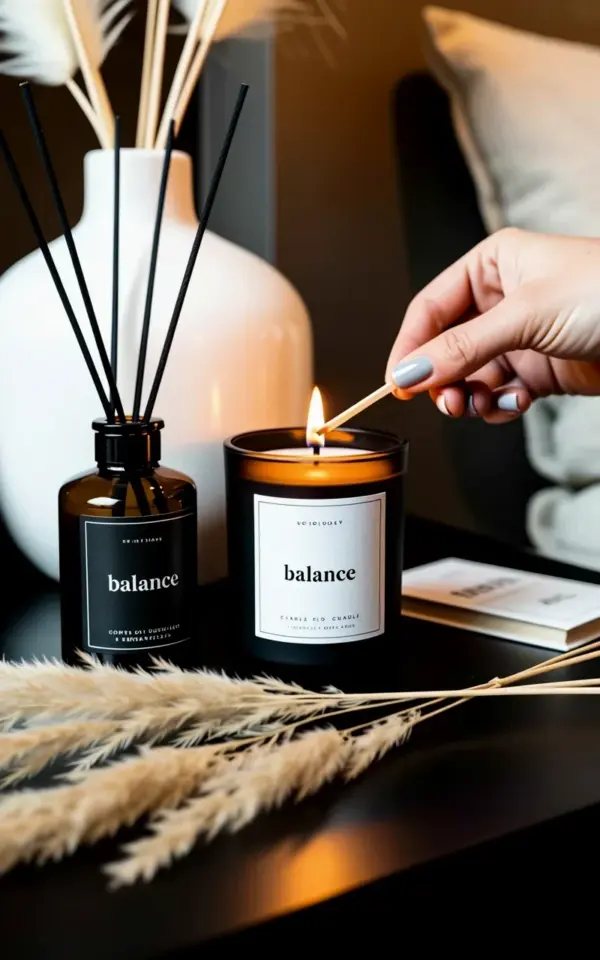
Strike a match and watch the flame catch the wick of that matte black Balance candle. In the split second before the scent starts to rise, the whole corner seems to hold its breath. This is candle decor at its best: simple, moody, and intentional. But I didn’t think that way for a long time. I used to scatter my candles around like they were fire hazards waiting to happen, which they sort of are, but that’s not the point. The point is that a reed diffuser, a candle, and a few natural textures can turn a plain shelf into the kind of comfortable corner you actually want to sit next to. And you can do it in the time it takes to find your matches.
The Common Mistake: Cluttered Surfaces
Most people think more is better when they style a shelf. They add a candle, then another candle, then a random book, then a framed photo that doesn’t match anything in the room. The result is a loud, fussy mess that feels stressful instead of soothing. The fix is a tray.
A dark wood tray groups the objects into one visual unit. In the photo, you can see it holding the Balance candle and the black glass diffuser together. The tray is what saves the scene. Without it, the candle would sit awkwardly next to a vase, and the pampas grass would look like it just wandered in from another room. So if you have a corner that never feels right, take everything off and start with a tray. Then add only three or four objects that make sense together. That’s it.
How to Build a Moody Aromatic Corner in Minutes
You do not need a full renovation to get a moody aromatic corner. You need a dark surface, a lit candle, a reed diffuser, and something tall and organic to anchor the side of the arrangement. Pampas grass works perfectly because of its height, but a dried branch or a tall plant also works.
The white ceramic vase in the photo is only partially visible. That’s deliberate. Not every piece needs to be fully seen for the composition to feel complete. You just need a hint of the shape and a small curve to break up all the straight lines. Think of it as a supporting actor, not the star.
- Place the tray near a wall, not in the middle of a walkway.
- Put the candle on one side and the diffuser on the other, leaving a little breathing room between them.
- Let the pampas grass lean back slightly, so it frames the setup instead of blocking it.
- Keep the ceramic vase in the background, slightly behind the candle.
Candle Decor: What Most People Get Wrong
Here’s the thing about candle decor. It’s not just about how pretty the candle looks when it’s unlit. It’s about how the flame behaves, how the label fits the palette, and how the scent works with the rest of the room. That matte black jar with the white label is a clever choice because it doesn’t scream for attention. It also hides soot beautifully. A bright red label or a gold shimmer jar will fight against a moody aesthetic every single time.
Another mistake is ignoring the wick. If you don’t trim the wick to about a quarter inch before lighting, you’ll get a tall, smoky flame that looks sloppy. I’m not saying this to be fussy. I once managed to crack a glass candle holder because the flame got too high and the oil pan underneath overheated. That was a scary, ugly lesson. So keep the wick short, burn the candle for no more than four hours at a time, and let the wax pool completely across the top before you snuff it out. That’s how you get an even burn and a corner that actually smells wonderful.
Reed Diffuser Placement: More Than Just a Pretty Bottle
The reed diffuser in the image uses thin black reeds in a dark glass bottle with the word “BALANCE” printed on it. It looks elegant, but the placement matters more than the bottle design. If you put the diffuser too close to the candle, the heat will make the oil evaporate quickly and throw off the scent balance. If you put it in a drafty doorway, the fragrance will disappear in whatever direction the air moves. Somewhere stable, away from direct sunlight and vents, is your best bet.
Flipping the reeds every few days also changes the game. I flip mine every Sunday while I’m doing my weekly reset, and I get a strong scent burst each time. But don’t flip them every single day. You’ll oversaturate the sticks and empty the bottle twice as fast. I learned this the hard way after going through a $40 diffuser oil in less than a month. Honestly, it hurt my wallet and my pride.
Pampas Grass: The Unexpected Anchor
Pampas grass is messy. The little fluff pieces get everywhere, and it sheds every time someone brushes past it. That doesn’t stop me from recommending it. The tall, soft stems add a texture that candles and diffusers simply cannot provide. They make the whole corner feel relaxed, natural, and a little wild. That’s a lovely contrast to the clean lines of a black glass jar and a dark wood tray.
If you’re worried about the mess, you can spray the heads lightly with hairspray when you first bring them home. It helps keep the fluff in place. Or just accept the mess like I did and keep a small hand broom near the shelf. Four minutes of cleanup a week is a small price for a corner that looks like it belongs in a shelter magazine, at least from a distance.
The Cozy Interior Formula: Light, Texture, and Scent
Why does this corner feel cozy? It’s not magic. Cozy interiors usually come down to the same three ingredients: warm light, layered textures, and a scent that makes you want to breathe deeply. The candle flame supplies the warm light, which is a completely different feeling from a lamp or an overhead light. The pampas grass, the dark wood tray, and the ceramic vase supply the texture. And the candle plus the reed diffuser supply the scent.
But here’s the catch. If the candle scent and the diffuser scent clash, the room will feel weird, not cozy. You want them to complement each other. For example, a warm vanilla candle pairs well with an amber or sandal
Leave a Comment