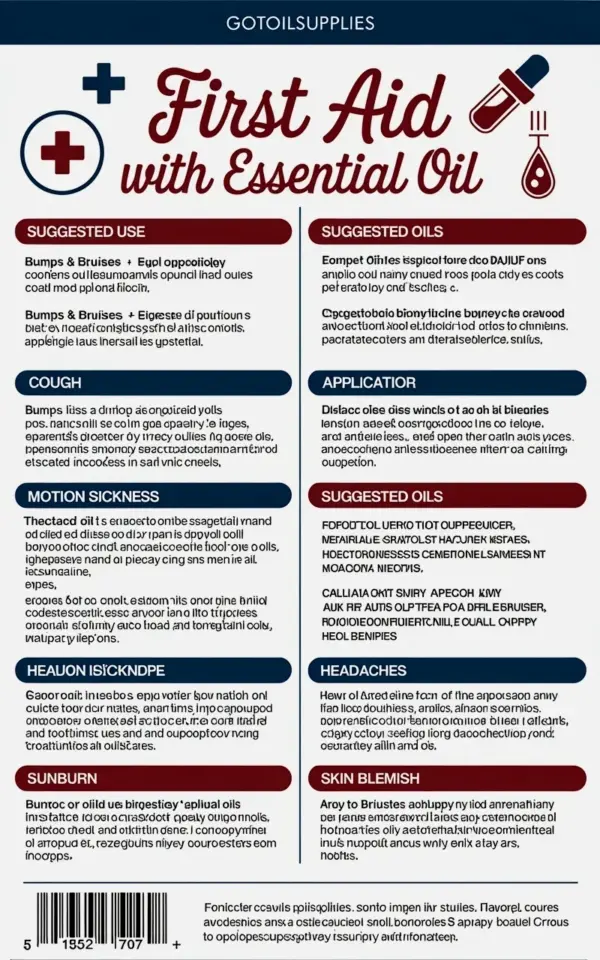
A shelf full of oils looks nice, but it doesn’t mean anything if you can’t find a drop of tea tree when a mosquito bite turns into a red, angry mess. I learned that the hard way after spending a stupid amount of money on novelty blends. This essential oil first aid chart is the only thing that stopped me from buying another ‘healing’ bottle I’d never open. It breaks everything down by suggested use, applicator, and the oils that actually work.
Start with a budget essential oils list, not a wishlist
Here’s the thing about budget essential oils: they’re only budget-friendly if you use them. A tiny bottle of sandalwood that sits in a drawer for four years isn’t an investment. It’s a guilt trip. Instead, make a list of the accidents you actually deal with. Cuts. Sunburns. Headaches. Insomnia. Bug bites. That list is your shopping list.
The guide I taped inside my cabinet had a navy blue header and white space to write notes. The sections were color coded, and each one listed a suggested use, an applicator, and the oils. I filled in only the ones I knew I’d grab. That kind of restraint is rare in the aromatherapy world, but it works.
First aid with oils: match the applicator to the actual problem
A drop of lavender from a dropper bottle is fine for a pillow. It’s not fine for a bleeding knuckle. That’s why the chart splits things by applicator. Cotton balls for cleaning, roller bottles for temples, spray bottles for larger areas like a sunburnt shoulder.
Ok so, for a bee sting, a cotton pad soaked in diluted lavender and tea tree pressed against the sting works nicely. For a tension headache
Leave a Comment